
A Threat That Escalates
Blow OutThis flow tracks the transition from covert, delayed poisonings to an exposed hostage crisis and fatal pursuit.
increasing Bearing strength in each event
 decreasing
Bearing strength in each eventdecreasingThe Hidden Attack

The Hidden Attack
Violence without a confrontation
A modified pellet strikes Ronnie O’Neill at a golf course. The shooter is distant, hidden, and absent before Ronnie understands that he has been attacked.
The victim’s assumption that an insect stung him helps preserve the attacker’s anonymity. The method makes time itself part of the violence.
A slow consequence
Ronnie continues his routine and only reaches medical care after his condition has worsened. The poison’s delay gives the offender space to disappear.
The attack begins the novel’s central tension: a quiet wound can conceal a deliberate murder whose consequences arrive days later.
Repeated Violence
Repeated Violence
A pattern gains victims
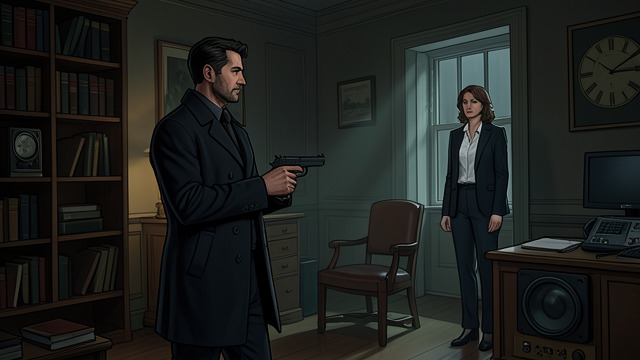
Morris Arthur Grimshaw and Anthony Dewlay die after attacks with similar wounds and symptoms. The first cases provide no surviving witnesses and little opportunity to identify the shooter.
The repeated method makes the offender more dangerous, not easier to understand. Police still do not know whether the victims share a personal connection or were selected by a broader rule.
A search for explanation
Investigators consider gang rivals, old grievances, and an organised series. Each new death pressures them to act while preserving the distinction between suspicion and fact.
The story’s conflict moves from one murder to the possibility of an active serial offender.
A Survivor Raises the Stakes

A Survivor Raises the Stakes
The attack fails to remain hidden
Heather Rand survives when the pellet lodges in her arm rather than producing an unnoticed fatal wound. Rapid treatment gives her a chance to live.
Her survival changes the police response: there is now a living victim and a clear warning that another attack may be imminent.
A threat to identifiable people
Heather recalls potential grievances, and the notebook later names police and other figures. The killer’s actions increasingly threaten people connected to the investigation.
The conflict is no longer only about solving past murders. It is about protecting people the offender may target next.
A Child in the Crossfire

A Child in the Crossfire
Criminal suspicion becomes personal danger
Melissa Walsh disappears after Ryan Walsh asks for protection. The kidnapping appears to connect the murder inquiry to the O’Neill family, but the evidence remains ambiguous.
The child’s illness and the absence of demands make time urgent. Police must search without allowing a mistaken accusation to trigger more violence.
A threat list becomes a hostage
Darren Clements later takes Françoise Mwamba at Trafford Centre. The planned attacks have erupted into direct coercion, with a child used to control an adult target.
The escalating conflict makes restraint as important as speed. A rushed armed response could kill the person it is meant to protect.
The Pursuit’s Consequence
The Pursuit’s Consequence
A suspect runs
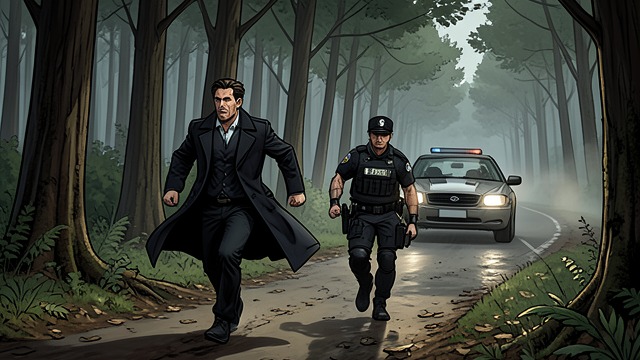
After Françoise escapes, Darren flees through the woods. Police track him with a drone and contain routes out, while Joanne follows on foot.
The pursuit leaves controlled grounds and reaches the M60. The movement from woodland to motorway changes the risk from a contained suspect to public traffic danger.
A fatal end
Darren is struck by a vehicle and killed. The murders stop, but the operation now involves a death in the course of police pursuit and a question of accountability.
The conflict’s final escalation is not a planned execution but an uncontrolled collision, leaving Joanne with guilt and the force with an independent review.
Friday, October 13
October 15–18
Thursday, October 19
October 17–22
Sunday, October 22, afternoon
